September 25, 2026 Post by : Editorial Folklore & Lore
Coconut on the Wind: The Strange, Sweet Chemistry of Gorse Scent
Ask a Scot what that prickly yellow bush on the hillside is called and you will get a different answer depending on where you are standing. In the northeast it is whin. In parts of the south and southwest, furze. Along the west coast and in the Highlands, gorse or goss. Travel a few miles and the name changes again, a reminder that Scotland's relationship with its wild plants has always been local, spoken, and deeply rooted in place.
The word gorse itself comes from Old English, while furze has Anglo-Saxon roots and whin is thought to derive from earlier Celtic languages. Each name carries its own associations. Whin tends to appear in place names across eastern Scotland, from Whinny Hill to Whin Park, marking land that was once covered in the shrub. Furze is more common in older English texts and in the southwest, where it sits alongside Cornish and Breton traditions. Goss, meanwhile, belongs firmly to the Gaelic-speaking west, where the plant appears in songs, sayings, and descriptions of the land.
Names in Place and Story
These names are not just linguistic curiosities. They are clues to how people used and thought about the plant. Whin was a working name, tied to fuel, fences, and farmland. Furze carried a slightly older, more literary feel, appearing in ballads and poems. Goss was often the name of the flowering bush in Gaelic verse, where its gold against grey stone became a symbol of resilience and stubborn beauty.
Local sayings grew up around each name. In some regions, whin was said to be unlucky to cut on certain days, or to bring bad weather if burned green. In others, gorse was a protective plant, planted near doorways to ward off harm. The variety of beliefs mirrors the variety of names, and both reflect a time when people lived far more closely with the land and its plants than most of us do now.
A Plant That Belongs to Everyone
What is striking is how many of these names survive in everyday speech. Older farmers still talk about whin hedges. Walkers in the west still describe hillsides covered in goss. Naturalists and foragers usually settle on gorse, the most widely recognised term, but the older names linger at the edges, ready to surface in a local accent or a remembered phrase.
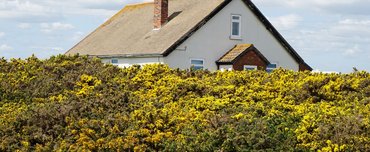
This patchwork of names is a small reminder that Scotland's landscapes are not just physical places but cultural ones. A hillside of flowering gorse is the same plant whether you call it whin, furze, or goss, but the name you use places you somewhere specific, connects you to a particular community and its history. The plant itself is indifferent, of course. It flowers on regardless, coconut-scented and fiercely thorned, carrying all its names at once.
Next time you pass a gorse bush, try naming it as a local would. You might find that the word you choose makes the landscape feel, for a moment, more like home.

Author
22 feb,2025
This incident opened my eyes to the value of Insurance in general, so I decided to examine my personal and business insurance.

Comment (3)
The payments are made directly from one person to another without passing through a central bank or clearing house.
22 feb,2025
ReplyThe Golden Gorse: Scotland's Most Misunderstood Bloom
23 feb,2025
ReplyForaging Gorse Flowers: A Beginner's Guide to the Coconut-Scented Harvest
23 feb,2025
Reply