September 13, 2026 Post by : Editorial Folklore
The Golden Gorse: Scotland's Most Misunderstood Bloom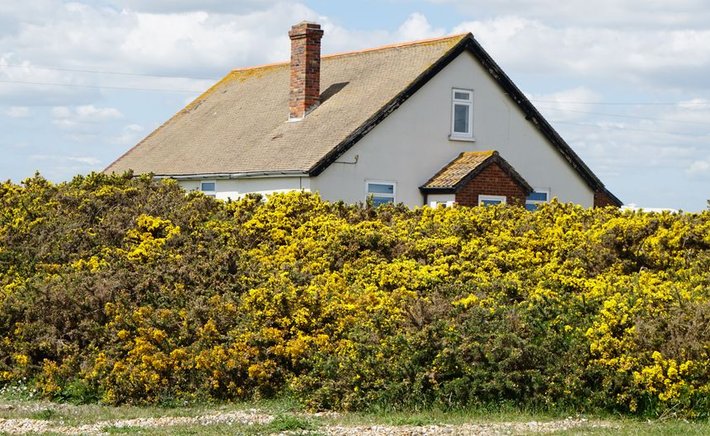
In the older stories of Scotland, gorse — whin, furze, goss — was not simply a plant. It was a fence against the otherworld. It grew on the edges of things: the boundary between one croft and the next, the rim of a cliff, the line where cultivated ground gave way to moor. And because it grew on edges, it was believed to hold power there, where the ordinary world thinned and something else pressed close.
One of the most common traditions was the Beltane fire. On the eve of the first of May, communities would gather whin bushes, sometimes mixed with juniper, and burn them in byres and around fields and houses. The smoke was thought to purify the ground and protect livestock from disease and fairy mischief. In some places, a piece of charred whin was carried in a pocket through the year, a small black talisman against bad luck.
Gorse was also used to mark boundaries. A sprig tucked above a door, a branch laid across a threshold, a bush left deliberately uncut at the corner of a field — all were ways of saying 'this far and no further' to whatever might be wandering. Fishermen's wives along the east coast would sew a few gorse flowers into a jacket collar before a boat went out. The scent was said to keep the crew safe, and to bring them home.
Gorse and the Fair Folk
Fairy lore in Scotland is rarely simple, and gorse sits in an ambiguous place within it. On one hand, the plant was a protection against fairies and their mischief. On the other, gorse thickets were said to be favourite hiding places for the fair folk themselves, and to disturb a large whin bush without good reason was to risk their displeasure. Some storytellers insisted that the fairies used gorse flowers as lanterns, and that the glow sometimes seen on a hillside at dusk was not a trick of the light but a procession of them moving through the whins.
There is a practical logic beneath the poetry. Gorse burns hot and fast, and its ash is rich in potash — good for the soil. It makes an excellent hedge, impenetrable to most animals, and a fine windbreak. A community that burned whin in spring and left it standing along boundaries was doing something sensible, and the stories grew around the practice rather than the other way round. Folklore, at its best, is just good husbandry with a memory.
Keeping the Old Ways Alive
You do not have to believe in fairies to keep a little of this folklore going. Light a small fire of whin cuttings on Beltane if you have a safe place to do it, and let the smoke do what smoke does — mark a change in the year. Tuck a sprig above your door in May. Leave one bush uncut at the corner of your garden, and see what moves into it. These are small gestures, but they connect a modern life to a long, slow, stubborn one.
The gorse does not need our stories. It has been growing on these edges for thousands of years, and it will go on growing long after the last person remembers why a charred branch was once carried in a pocket. But the stories are ours, and they are worth keeping — not as superstition, but as a way of paying attention to a plant that has been paying attention to us for a very long time.

Author

22 feb,2025
This incident opened my eyes to the value of Insurance in general, so I decided to examine my personal and business insurance.


Comment (3)
The payments are made directly from one person to another without passing through a central bank or clearing house.
22 feb,2025
ReplyThree Gorse Recipes to Bring the Hillside into Your Kitchen
23 feb,2025
ReplyA Walk Among the Whins: Finding Solace in Scotland's Coastal Gorse
23 feb,2025
Reply