September 16, 2026 Post by : Editorial Foraging Notes
A Year of Gorse: Notes from a Scottish Hedgerow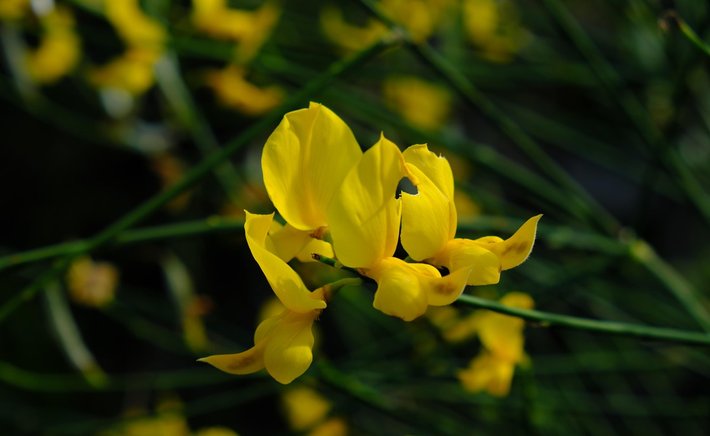
Ask anyone who has walked a Scottish hillside in May what gorse smells like and you will get the same answer, more or less: coconut. Maybe coconut and vanilla. Maybe coconut and warm butter. Occasionally someone will say almond, or marzipan, or the inside of a baker's shop on a cold morning. Nobody says 'floral' or 'green' or 'earthy.' Gorse is a coconut plant, and it is a strange and lovely thing that such a spiky, wind-hardened shrub should smell like a holiday.
The chemistry is less romantic than the experience. The flowers release a small suite of volatile compounds — among them a group of molecules known as lactones, which also turn up in coconut, peaches, and butter. Warmth and moisture lift them into the air, which is why gorse smells strongest on a mild, damp day, and why the scent can carry for what feels like miles along a coastal path. On a cold, dry day the same bush is almost silent.
What fascinates me is that this scent is not really for us. It is a signal to pollinators — bees, hoverflies, and early butterflies — that a reliable source of nectar is open for business. Gorse flowers through much of the year, and its coconut perfume is a kind of advertisement, a promise of sugar in a landscape that is often short of it. We are simply eavesdropping.
Why the Scent Changes Through the Season
The gorse you smell in February is not quite the gorse you smell in June. Early flowers tend to be smaller and the scent sharper, almost coconut-soap-like, perhaps because the air is cold and the volatiles need more punch to travel. By late spring, when the bushes are heavy with bloom and the days are longer, the perfume is rounder and sweeter, closer to vanilla. Some foragers swear they can tell the difference between a first-flush bush and a second-flush one by scent alone.
Weather matters too. Rain washes the flowers clean and then, as they dry, releases a burst of fragrance that can be almost overwhelming. Wind strips the scent away almost as soon as it forms, which is why a sheltered gorse bank on a breezy day will smell far stronger than an exposed one. If you want the full experience, walk a path that runs along the lee side of a hedge, or find a hollow where the air sits still.
Bringing the Scent Home
You cannot bottle gorse easily — the volatiles are fragile and fade quickly — but you can capture a little of it in the kitchen. Gorse flowers infused in honey, cream, or sugar retain a soft coconut note that survives for weeks. A handful of flowers steeped in hot milk makes a custard that tastes like a Scottish hillside in May. And a gorse simple syrup, poured over poached rhubarb or a plain sponge, is one of the quietest, strangest pleasures of the foraging year.
Pick only fully open flowers, and pick them on a dry day after the dew has lifted. Use them the same day if you can. The scent will not last, but that is part of the point: gorse is a plant of the moment, and the moment is worth chasing.


Author

22 feb,2025
This incident opened my eyes to the value of Insurance in general, so I decided to examine my personal and business insurance.




Comment (3)
The payments are made directly from one person to another without passing through a central bank or clearing house.
22 feb,2025
ReplyWhin, Furze, and Goss: The Many Names of Scotland's Golden Thorn
23 feb,2025
ReplyThree Gorse Recipes to Bring the Hillside into Your Kitchen
23 feb,2025
Reply